


How does Steel Bookshelf achieve its superior corrosion and rust resistance?
Release Time : 2026-01-15
In modern home and office environments, Steel Bookshelf, with its sturdy structure, high load-bearing capacity, and efficient space utilization, has become an ideal storage choice for studies, living rooms, offices, and even libraries. However, steel itself is susceptible to oxidation and corrosion due to environmental humidity, oxygen, and pollutants. Improper protection not only affects aesthetics but also weakens structural strength. Steel Bookshelf's superior corrosion and rust resistance is not accidental but stems from the systematic synergy of superior material selection, advanced processes, and surface treatment technologies.
1. High-Quality Cold-Rolled Steel Sheet: The First Line of Defense Against Corrosion and Rust
Steel Bookshelf uses high-quality cold-rolled steel sheet as its base material, which is the foundation for long-term corrosion resistance. Compared to hot-rolled sheets, cold-rolled steel sheets have a smoother surface, more uniform thickness, denser internal structure, and lower impurity content, fundamentally reducing the formation of corrosion points. Meanwhile, the cold rolling process gives the steel higher strength and hardness, making it less prone to deformation when subjected to a single-layer 100kg load. This avoids coating cracking due to structural stress concentration, thus indirectly improving the integrity of the anti-corrosion system. The high-quality substrate provides an ideal carrier for subsequent surface treatment, ensuring stronger coating adhesion and more uniform coverage.
2. Electrostatic Spraying Process: Forming a Dense and Environmentally Friendly Protective Barrier
The core of corrosion and rust prevention lies in the surface coating. This product uses electrostatic spraying technology, uniformly adsorbing environmentally friendly powder coating onto the grounded metal bookshelf surface through a high-voltage electrostatic field. Due to electrostatic action, the coating particles actively wrap around the edges, corners, grooves, and other complex areas of the workpiece, achieving 360° coverage without dead angles. Subsequently, the bookshelf enters a high-temperature curing oven, where the powder melts, flows, and cross-links to form a film, creating a uniform, dense, and tough polymer coating.
This coating not only possesses excellent barrier properties—effectively preventing water vapor, oxygen, salt, and other corrosive media from contacting the steel plate—but also has multiple advantages such as being environmentally friendly and non-toxic, fire-retardant, and scratch-resistant. The powder coating used complies with RoHS and other environmental standards, contains no volatile organic solvents, and is safe for use in home or office environments. Furthermore, the coating itself has a certain degree of moisture resistance, providing long-term protection against moisture corrosion even during the rainy season in southern regions or in high-humidity environments like libraries.
3. Precision Manufacturing Process: Eliminating Weak Points in Corrosion Protection
Even the best coatings are susceptible to damage. Therefore, the bookshelves are designed to eliminate potential corrosion hazards from the molding stage. The products are processed using laser cutting and CNC bending technology, resulting in smooth, burr-free cuts and precise bending angles, avoiding micro-cracks, weld slag, or stress concentration areas caused by traditional stamping or manual welding. These areas are often the starting point of rust. Laser and CNC processes ensure neat component edges and tight joints, significantly reducing the risk of poor coating adhesion. Simultaneously, the overall structure primarily uses plug-in or bolt connections to minimize welding points; even where welding occurs, it is ground and repaired to ensure the continuity and integrity of the anti-corrosion system.
4. Synergistic Protection of Structural Design and Maintenance
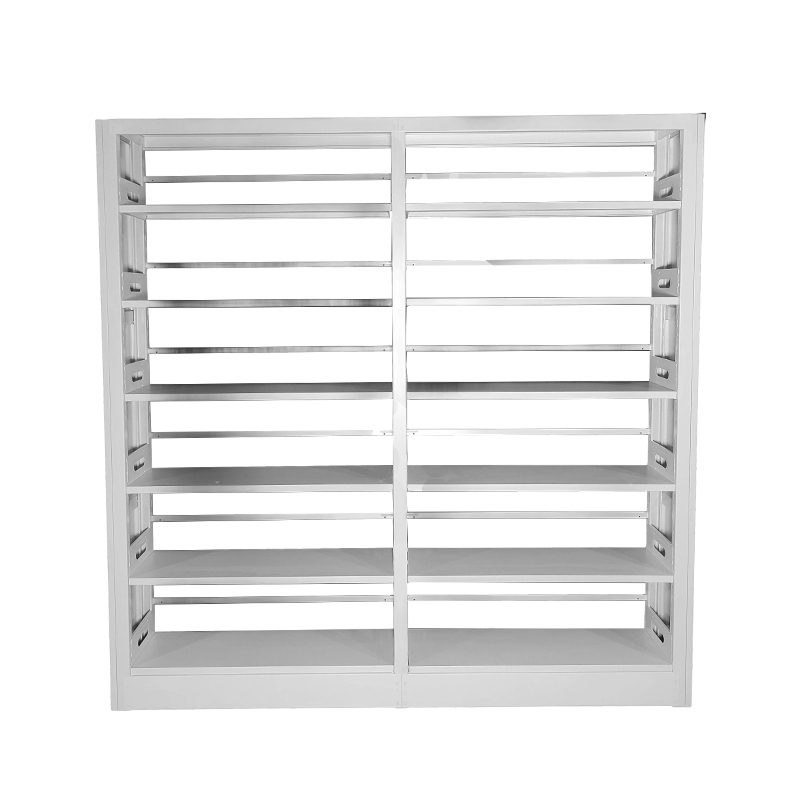
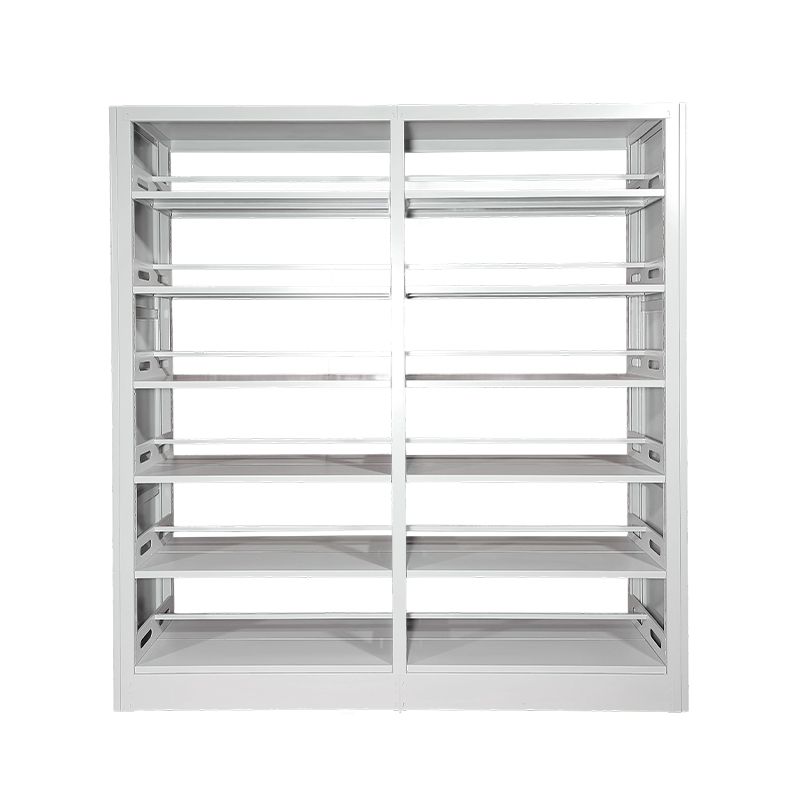
In addition to materials and processes, a reasonable structural design also contributes to long-term corrosion resistance. For example, the shelves feature a reinforced rib design to enhance rigidity, reduce micro-deformation caused by long-term load-bearing, and prevent coating fatigue cracking; the bottom is equipped with ground-level pads to avoid direct contact with ground moisture; the open frame structure facilitates air circulation and reduces localized moisture accumulation. Users only need to avoid prolonged immersion, contact with strong acids and alkalis, and regularly clean with a dry cloth to keep the bookshelf looking new for a long time.
In summary, the Steel Bookshelf's superior corrosion and rust resistance is the result of a four-in-one approach: high-quality base material + electrostatic spraying + precision manufacturing + rational design. It not only solves the problem of traditional metal furniture being prone to rust, but also meets the dual needs of modern spaces for functionality and aesthetics with its environmentally friendly, durable, and high load-bearing capacity. Whether carrying heavy books or displaying exquisite ornaments, this Steel Bookshelf can accompany users for years with its sturdy and reliable presence, remaining as good as new.
1. High-Quality Cold-Rolled Steel Sheet: The First Line of Defense Against Corrosion and Rust
Steel Bookshelf uses high-quality cold-rolled steel sheet as its base material, which is the foundation for long-term corrosion resistance. Compared to hot-rolled sheets, cold-rolled steel sheets have a smoother surface, more uniform thickness, denser internal structure, and lower impurity content, fundamentally reducing the formation of corrosion points. Meanwhile, the cold rolling process gives the steel higher strength and hardness, making it less prone to deformation when subjected to a single-layer 100kg load. This avoids coating cracking due to structural stress concentration, thus indirectly improving the integrity of the anti-corrosion system. The high-quality substrate provides an ideal carrier for subsequent surface treatment, ensuring stronger coating adhesion and more uniform coverage.
2. Electrostatic Spraying Process: Forming a Dense and Environmentally Friendly Protective Barrier
The core of corrosion and rust prevention lies in the surface coating. This product uses electrostatic spraying technology, uniformly adsorbing environmentally friendly powder coating onto the grounded metal bookshelf surface through a high-voltage electrostatic field. Due to electrostatic action, the coating particles actively wrap around the edges, corners, grooves, and other complex areas of the workpiece, achieving 360° coverage without dead angles. Subsequently, the bookshelf enters a high-temperature curing oven, where the powder melts, flows, and cross-links to form a film, creating a uniform, dense, and tough polymer coating.
This coating not only possesses excellent barrier properties—effectively preventing water vapor, oxygen, salt, and other corrosive media from contacting the steel plate—but also has multiple advantages such as being environmentally friendly and non-toxic, fire-retardant, and scratch-resistant. The powder coating used complies with RoHS and other environmental standards, contains no volatile organic solvents, and is safe for use in home or office environments. Furthermore, the coating itself has a certain degree of moisture resistance, providing long-term protection against moisture corrosion even during the rainy season in southern regions or in high-humidity environments like libraries.
3. Precision Manufacturing Process: Eliminating Weak Points in Corrosion Protection
Even the best coatings are susceptible to damage. Therefore, the bookshelves are designed to eliminate potential corrosion hazards from the molding stage. The products are processed using laser cutting and CNC bending technology, resulting in smooth, burr-free cuts and precise bending angles, avoiding micro-cracks, weld slag, or stress concentration areas caused by traditional stamping or manual welding. These areas are often the starting point of rust. Laser and CNC processes ensure neat component edges and tight joints, significantly reducing the risk of poor coating adhesion. Simultaneously, the overall structure primarily uses plug-in or bolt connections to minimize welding points; even where welding occurs, it is ground and repaired to ensure the continuity and integrity of the anti-corrosion system.
4. Synergistic Protection of Structural Design and Maintenance
In addition to materials and processes, a reasonable structural design also contributes to long-term corrosion resistance. For example, the shelves feature a reinforced rib design to enhance rigidity, reduce micro-deformation caused by long-term load-bearing, and prevent coating fatigue cracking; the bottom is equipped with ground-level pads to avoid direct contact with ground moisture; the open frame structure facilitates air circulation and reduces localized moisture accumulation. Users only need to avoid prolonged immersion, contact with strong acids and alkalis, and regularly clean with a dry cloth to keep the bookshelf looking new for a long time.
In summary, the Steel Bookshelf's superior corrosion and rust resistance is the result of a four-in-one approach: high-quality base material + electrostatic spraying + precision manufacturing + rational design. It not only solves the problem of traditional metal furniture being prone to rust, but also meets the dual needs of modern spaces for functionality and aesthetics with its environmentally friendly, durable, and high load-bearing capacity. Whether carrying heavy books or displaying exquisite ornaments, this Steel Bookshelf can accompany users for years with its sturdy and reliable presence, remaining as good as new.