


How can the surface coating process of steel bookshelf achieve both wear resistance and aesthetic appeal?
Release Time : 2026-02-27
The surface coating process for steel bookshelves must balance wear resistance and aesthetics. This requires a collaborative approach across seven aspects: material selection, process optimization, structural design, environmental adaptability, color matching, quality inspection, and maintenance. This multi-layered protective and decorative system ensures the bookshelf maintains stable performance and visual appeal over long-term use.
Material selection is fundamental to wear resistance. The coating materials for steel bookshelves must possess high hardness and wear resistance. For example, alumina or silicon carbide ceramic coatings, with their high density and hardness, significantly improve surface scratch resistance. Furthermore, environmentally friendly powder coatings, due to their solvent-free nature and strong adhesion, have become the mainstream choice. The resulting uniform and dense coating effectively resists daily impacts and friction while preventing the release of harmful substances such as formaldehyde, balancing durability and environmental friendliness.
Process optimization directly affects coating performance. Electrostatic spraying technology uses a high-voltage electrostatic field to evenly adsorb powder onto the bookshelf surface, forming a coating of controllable thickness. This avoids drips and orange peel effects, ensuring a smooth and even appearance. The high-temperature curing process melts and levels the powder, further enhancing the coating's density and improving its wear resistance. For complex structures such as bookshelf corners, localized reinforced spraying or manual touch-ups are necessary to ensure complete coverage and prevent premature wear due to insufficient thickness.
Structural design must be coordinated with the spraying process. Shelves, uprights, and other components of the bookshelf should be rounded before spraying to reduce localized stress concentration on the coating from sharp edges, lowering the risk of peeling. Modular design facilitates separate spraying, avoiding uneven coating caused by obstruction during overall spraying. For example, uprights and shelves can be sprayed separately before assembly, ensuring that the coating thickness and quality of each component meet standards.
Environmental adaptability is crucial for coating durability. Bookshelves are commonly used in libraries, offices, and other similar settings, requiring resistance to humidity, temperature changes, and cleaning agent corrosion. Therefore, the spraying material must be moisture-proof and chemically resistant. For example, epoxy resin-based powder coatings offer excellent water and acetic acid resistance, preventing blistering or peeling caused by environmental erosion. In addition, the coating must pass a damp heat resistance test to ensure that it maintains adhesion and gloss under high temperature and humidity conditions.
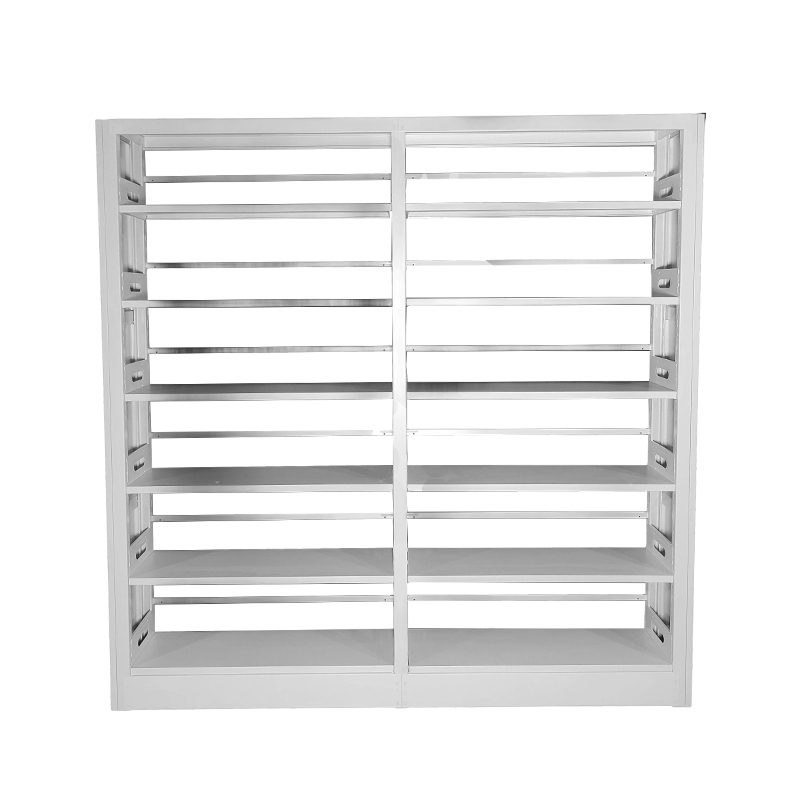
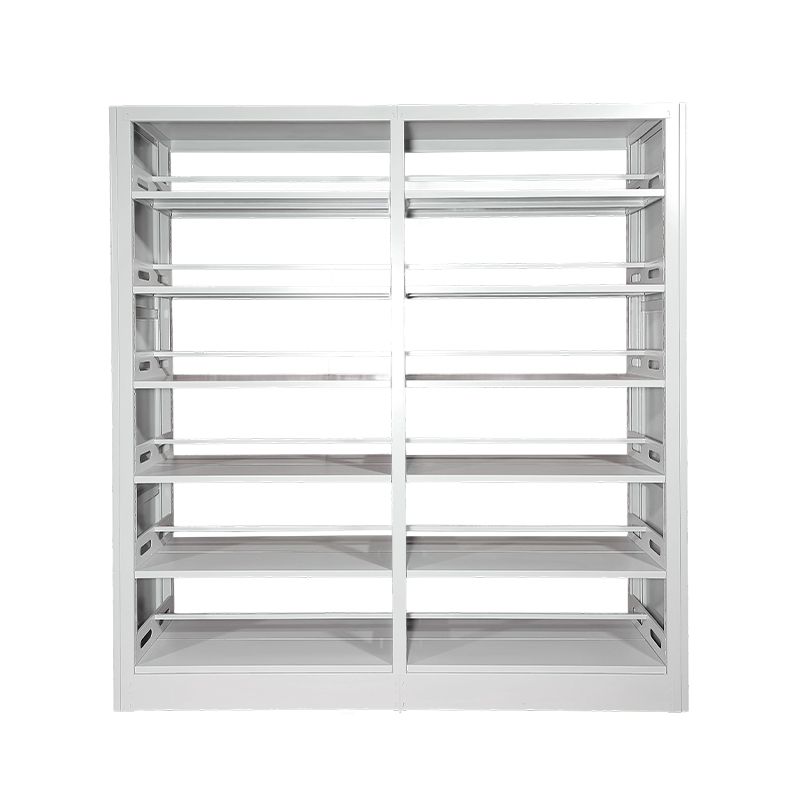
Color matching must balance aesthetics and practicality. The paint color of the steel bookshelf should coordinate with the environment in which it will be used, for example, using neutral to cool tones such as light gray and light bean paste to create a tranquil and elegant atmosphere. Some designs can enhance the sense of layering through localized dark accents, such as spraying black stripes at the bottom of the columns or the edges of the shelves to create visual contrast. At the same time, colors that can create a sense of oppression, such as dark green and dark brown, should be avoided to ensure the transparency of the space.
Quality inspection is the last line of defense in process control. The coated bookshelves must undergo multiple tests, including coating thickness measurement, adhesion testing, and color difference analysis. A magnetic thickness gauge ensures that the dry film thickness meets the standard, while cross-cut adhesion test and tape test verify the bonding strength between the coating and the substrate. A colorimeter is used to control the color consistency of different batches of products to avoid visual differences caused by fluctuations in spraying parameters.
Maintenance and care can extend the life of the coating. During daily use, avoid scratching the bookshelf surface with sharp tools. When cleaning, use a soft cloth to wipe it to prevent hard objects from scratching the coating. For localized stains, use a neutral detergent to treat them, avoiding strong acids and alkalis that may corrode the coating. After long-term use, periodically check the integrity of the coating and repair worn areas with touch-up paint to restore its protective and decorative functions.