


Can a Rust-Proof Steel Bookshelf Maintain Its Aesthetic Appeal in Humid Library Conditions Over Decades?
Release Time : 2026-03-19
The question of whether a rust-proof steel bookshelf can maintain its aesthetic appeal in humid library conditions over decades touches upon the intersection of material science, industrial design, and long-term preservation strategies. Libraries, by their very nature, are environments where humidity control is often a delicate balancing act; too dry, and paper becomes brittle, but too humid, and mold threatens the collection. This fluctuating moisture levels create a hostile environment for many materials, particularly metals prone to oxidation. However, the evolution of steel manufacturing and surface treatment technologies has produced a generation of bookshelves specifically engineered to withstand these challenges. The answer lies not just in the inherent properties of steel, but in the sophisticated protective layers applied to it, which serve as an impenetrable barrier against the corrosive effects of time and moisture.
At the core of this durability is the use of high-quality cold-rolled steel plates. Unlike hot-rolled steel, which can have a rougher surface and varying thickness, cold-rolled steel is processed at room temperature, resulting in a smoother finish and tighter dimensional tolerances. This smoothness is crucial because it provides an ideal substrate for subsequent coating processes. Any imperfections or roughness in the base metal could trap moisture or create weak points where corrosion might begin. By starting with a superior base material, manufacturers ensure that the structural integrity of the bookshelf remains uncompromised, providing a stable foundation that can support heavy loads of books without warping or sagging, even after years of exposure to varying atmospheric conditions.
The true guardian of the steel’s aesthetic appeal, however, is the electrostatic spraying process, often referred to as powder coating. This technique involves applying a dry powder composed of resin and pigments to the steel surface using an electrostatic charge. The charge ensures that the powder adheres evenly to every nook and cranny of the bookshelf, creating a uniform layer that is then cured under heat to form a hard, durable finish. Unlike traditional liquid paints that can drip, run, or leave thin spots, electrostatic spraying creates a continuous, seamless shield. This coating is specifically formulated to be anti-corrosion and rust-proof, effectively isolating the steel from oxygen and water vapor, the two primary catalysts for rust formation. In a humid library, this barrier prevents the microscopic chemical reactions that lead to the unsightly orange flaking associated with rusted metal.
Over decades, the aesthetic maintenance of these bookshelves relies heavily on the resilience of this powder-coated finish against environmental stressors. High humidity can cause some materials to swell, peel, or discolor, but high-quality electrostatic coatings are designed to be chemically inert and physically robust. They resist UV degradation, preventing the colors from fading even in libraries with large windows and significant natural light. Furthermore, the coating is resistant to chipping and scratching, which are common in high-traffic areas where books are frequently retrieved and returned. Even if the surface is subjected to minor abrasions, the integrity of the surrounding coating usually prevents moisture from penetrating to the steel underneath, stopping corrosion before it can start. This means that the sleek, professional appearance of the bookshelf remains intact, preserving the dignified atmosphere essential to a library setting.
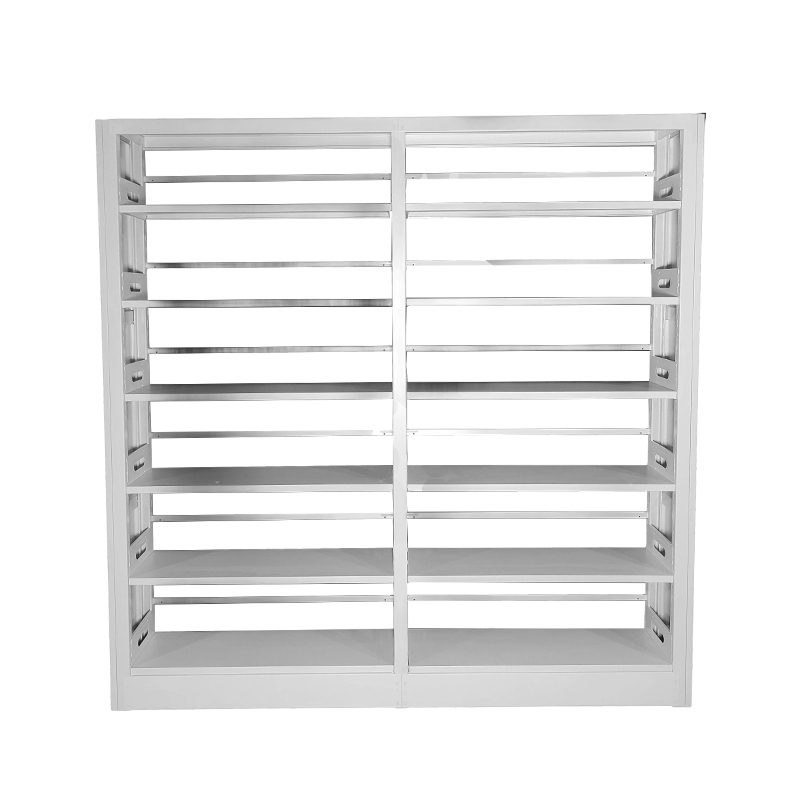
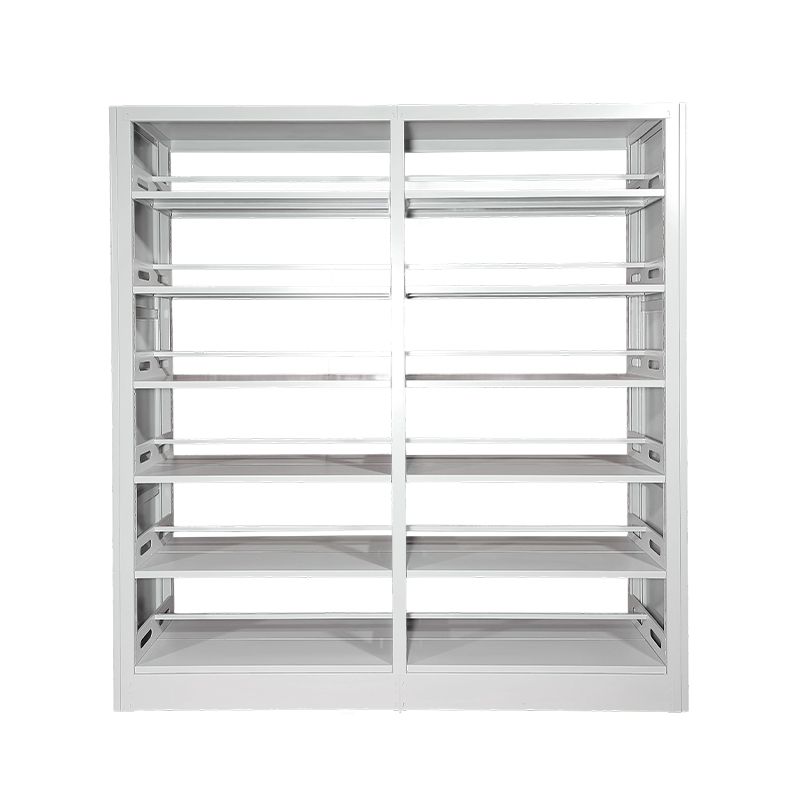
Beyond mere resistance to rust, the design of modern steel bookshelves often incorporates features that further enhance their longevity in humid conditions. The structures are typically welded or assembled in ways that minimize water traps, ensuring that condensation does not accumulate in joints or corners. The stability of the structure, capable of bearing up to 100kg per layer, means that the shelves do not flex under load, which could otherwise crack the protective coating and expose the metal. This structural rigidity, combined with the corrosion-resistant finish, creates a synergistic effect where the physical strength of the unit supports the chemical protection of its surface. As a result, the bookshelf does not just survive the decades; it continues to function as a reliable and beautiful storage solution without requiring frequent repainting or restoration.
The economic and cultural implications of such durability are significant for library management. Replacing shelving units every few years due to rust damage is not only costly but also disruptive to the library’s operations and the preservation of its collections. A rust-proof steel bookshelf represents a long-term investment that pays dividends through decades of service. It allows librarians to focus on curating knowledge rather than managing infrastructure decay. Moreover, the consistent aesthetic appeal contributes to the psychological comfort of patrons, who associate clean, well-maintained surroundings with the reliability and value of the information housed within. The visual continuity of the shelving helps maintain a sense of order and permanence, which is central to the library’s role as a repository of human history.
In conclusion, a rust-proof steel bookshelf, constructed from cold-rolled steel and treated with advanced electrostatic spraying, is fully capable of maintaining its aesthetic appeal in humid library conditions over decades. The combination of a smooth, high-strength base material and a seamless, chemically resistant protective coating creates a formidable defense against the corrosive forces of moisture and time. These bookshelves do not merely resist rust; they preserve their visual integrity, color vibrancy, and structural stability, ensuring that they remain a functional and attractive component of the library environment for generations. As institutions look toward sustainable and cost-effective solutions, the enduring quality of these specialized steel units stands as a testament to the power of modern engineering to conquer the challenges of environmental decay.
At the core of this durability is the use of high-quality cold-rolled steel plates. Unlike hot-rolled steel, which can have a rougher surface and varying thickness, cold-rolled steel is processed at room temperature, resulting in a smoother finish and tighter dimensional tolerances. This smoothness is crucial because it provides an ideal substrate for subsequent coating processes. Any imperfections or roughness in the base metal could trap moisture or create weak points where corrosion might begin. By starting with a superior base material, manufacturers ensure that the structural integrity of the bookshelf remains uncompromised, providing a stable foundation that can support heavy loads of books without warping or sagging, even after years of exposure to varying atmospheric conditions.
The true guardian of the steel’s aesthetic appeal, however, is the electrostatic spraying process, often referred to as powder coating. This technique involves applying a dry powder composed of resin and pigments to the steel surface using an electrostatic charge. The charge ensures that the powder adheres evenly to every nook and cranny of the bookshelf, creating a uniform layer that is then cured under heat to form a hard, durable finish. Unlike traditional liquid paints that can drip, run, or leave thin spots, electrostatic spraying creates a continuous, seamless shield. This coating is specifically formulated to be anti-corrosion and rust-proof, effectively isolating the steel from oxygen and water vapor, the two primary catalysts for rust formation. In a humid library, this barrier prevents the microscopic chemical reactions that lead to the unsightly orange flaking associated with rusted metal.
Over decades, the aesthetic maintenance of these bookshelves relies heavily on the resilience of this powder-coated finish against environmental stressors. High humidity can cause some materials to swell, peel, or discolor, but high-quality electrostatic coatings are designed to be chemically inert and physically robust. They resist UV degradation, preventing the colors from fading even in libraries with large windows and significant natural light. Furthermore, the coating is resistant to chipping and scratching, which are common in high-traffic areas where books are frequently retrieved and returned. Even if the surface is subjected to minor abrasions, the integrity of the surrounding coating usually prevents moisture from penetrating to the steel underneath, stopping corrosion before it can start. This means that the sleek, professional appearance of the bookshelf remains intact, preserving the dignified atmosphere essential to a library setting.
Beyond mere resistance to rust, the design of modern steel bookshelves often incorporates features that further enhance their longevity in humid conditions. The structures are typically welded or assembled in ways that minimize water traps, ensuring that condensation does not accumulate in joints or corners. The stability of the structure, capable of bearing up to 100kg per layer, means that the shelves do not flex under load, which could otherwise crack the protective coating and expose the metal. This structural rigidity, combined with the corrosion-resistant finish, creates a synergistic effect where the physical strength of the unit supports the chemical protection of its surface. As a result, the bookshelf does not just survive the decades; it continues to function as a reliable and beautiful storage solution without requiring frequent repainting or restoration.
The economic and cultural implications of such durability are significant for library management. Replacing shelving units every few years due to rust damage is not only costly but also disruptive to the library’s operations and the preservation of its collections. A rust-proof steel bookshelf represents a long-term investment that pays dividends through decades of service. It allows librarians to focus on curating knowledge rather than managing infrastructure decay. Moreover, the consistent aesthetic appeal contributes to the psychological comfort of patrons, who associate clean, well-maintained surroundings with the reliability and value of the information housed within. The visual continuity of the shelving helps maintain a sense of order and permanence, which is central to the library’s role as a repository of human history.
In conclusion, a rust-proof steel bookshelf, constructed from cold-rolled steel and treated with advanced electrostatic spraying, is fully capable of maintaining its aesthetic appeal in humid library conditions over decades. The combination of a smooth, high-strength base material and a seamless, chemically resistant protective coating creates a formidable defense against the corrosive forces of moisture and time. These bookshelves do not merely resist rust; they preserve their visual integrity, color vibrancy, and structural stability, ensuring that they remain a functional and attractive component of the library environment for generations. As institutions look toward sustainable and cost-effective solutions, the enduring quality of these specialized steel units stands as a testament to the power of modern engineering to conquer the challenges of environmental decay.