


How to Balance Structural Stability and Material Utilization in Steel Bookshelf Load-Bearing Design?
Release Time : 2026-04-08
In modern office and warehouse environments, steel bookshelves are widely used due to their high strength and durability. However, in practical design, achieving a balance between meeting high load-bearing requirements and controlling material costs and overall weight, thus balancing structural stability and material utilization, becomes a key technical issue.
1. A Reasonable Structural Form is the Foundation of Stability
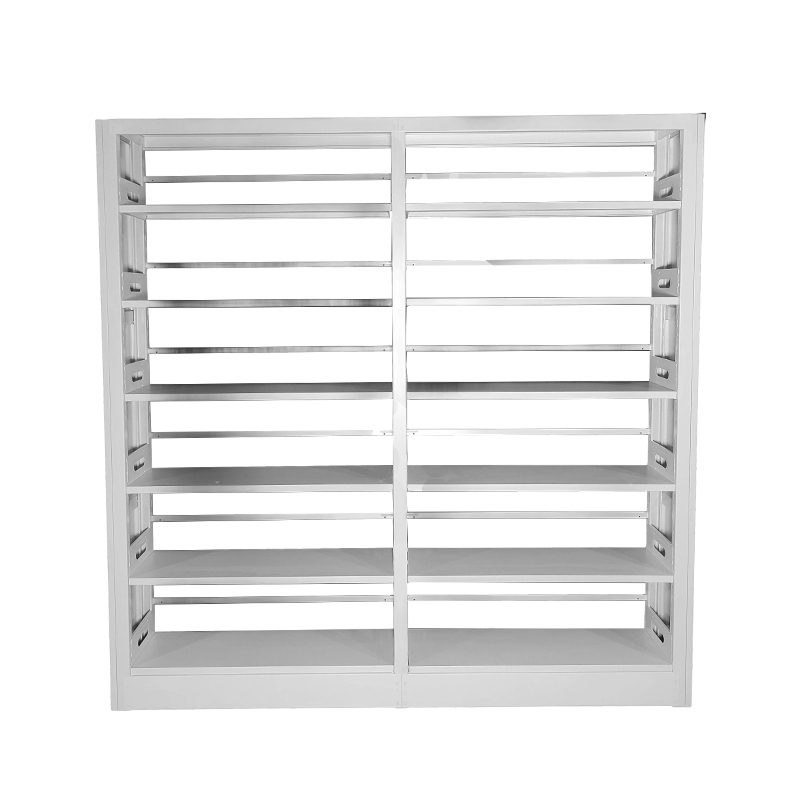
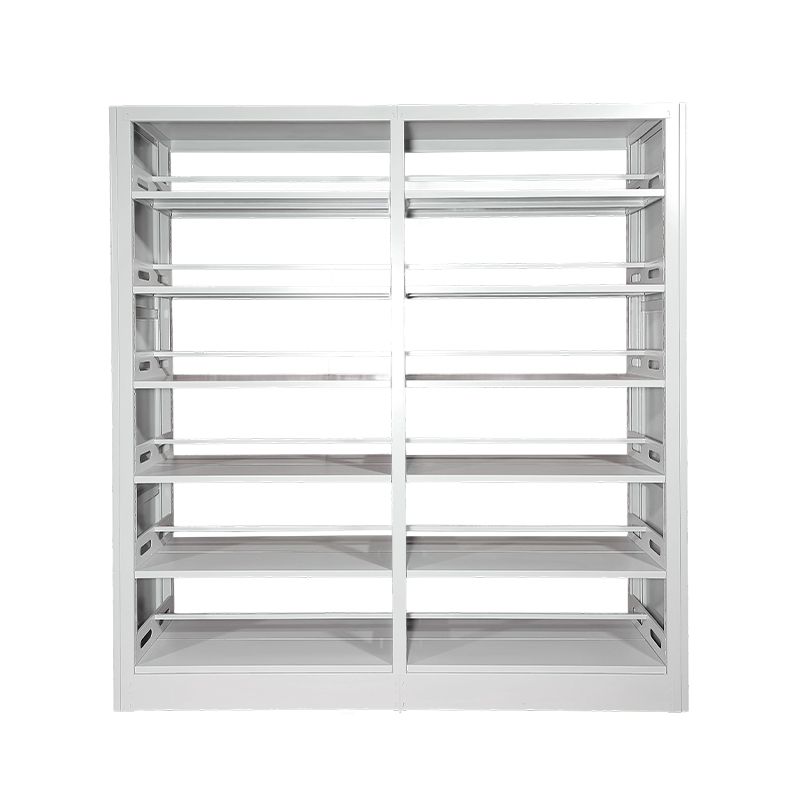
The load-bearing capacity of steel bookshelves primarily depends on the overall structural form. Common designs employ a frame structure of columns, beams, and shelves, effectively distributing the load to various load-bearing components. Columns are typically designed with folded edges or reinforcing ribs to improve bending and compressive strength; beams bear the main lateral load transfer function. A reasonable structural layout ensures that forces are evenly transferred from the shelves to the ground, helping to improve overall stability without adding excessive material.
2. Cross-Section Optimization Improves Material Utilization Efficiency
Optimizing the cross-sectional shape of components, while ensuring strength, is an important means of reducing material usage. For example, using cold-formed thin-walled steel sections such as "C-shaped" and "Ω-shaped" sections can achieve high bending stiffness with less material consumption. This type of structure increases the moment of inertia of the section, improving the component's resistance to deformation, thus achieving "reinforcement through shape." Compared to solid structures, this design can significantly reduce weight while maintaining good load-bearing performance.
3. Shelf Design and Stress Distribution Optimization
Shelves, as components that directly support books or items, have a significant impact on overall performance. By adding reinforcing ribs or folded edges under the shelves, deflection can be effectively reduced, preventing deformation under heavy loads. Furthermore, rationally controlling the shelf span and support point spacing to ensure even load distribution also helps reduce single-point stress, thereby reducing material thickness requirements and achieving lightweight design.
4. Connection Methods and Overall Stiffness Enhancement
The connection methods between the various components of the bookshelf also affect structural stability. Using high-strength bolt connections or snap-fit structures can provide sufficient connection stiffness while ensuring convenient installation. Optimizing the design of connection nodes to provide excellent shear and bending resistance helps form a stable spatial system. Furthermore, appropriately adding lateral or back supports (such as diagonal braces or back panels) can significantly improve resistance to lateral deformation, preventing the bookshelf from swaying or tilting under load.
5. Material Performance and Safety Factor Control
In terms of material selection, using high-strength steel allows for reduced thickness while meeting load-bearing requirements, thus reducing material usage. Simultaneously, setting a reasonable safety factor avoids material waste caused by overly conservative design. Scientifically assessing the load based on actual usage scenarios, ensuring the design meets safety standards without excessive redundancy, is a crucial strategy for optimization.
6. Manufacturing Process and Precision Assurance
High-quality manufacturing processes ensure the full realization of design performance. Precise stamping, bending, and welding processes reduce material defects and stress concentration, thereby improving the actual load-bearing capacity of components. While ensuring processing accuracy, it also reduces the need for additional reinforcement due to errors, further optimizing material usage.
In summary, achieving structural stability and optimized material usage in the load-bearing design of steel bookshelf requires systematic optimization from multiple aspects, including structural form, cross-sectional design, stress distribution, connection methods, and material selection. Through scientific design and meticulous manufacturing, it is possible to achieve the dual goals of lightweighting and cost control while ensuring safety and reliability.
1. A Reasonable Structural Form is the Foundation of Stability
The load-bearing capacity of steel bookshelves primarily depends on the overall structural form. Common designs employ a frame structure of columns, beams, and shelves, effectively distributing the load to various load-bearing components. Columns are typically designed with folded edges or reinforcing ribs to improve bending and compressive strength; beams bear the main lateral load transfer function. A reasonable structural layout ensures that forces are evenly transferred from the shelves to the ground, helping to improve overall stability without adding excessive material.
2. Cross-Section Optimization Improves Material Utilization Efficiency
Optimizing the cross-sectional shape of components, while ensuring strength, is an important means of reducing material usage. For example, using cold-formed thin-walled steel sections such as "C-shaped" and "Ω-shaped" sections can achieve high bending stiffness with less material consumption. This type of structure increases the moment of inertia of the section, improving the component's resistance to deformation, thus achieving "reinforcement through shape." Compared to solid structures, this design can significantly reduce weight while maintaining good load-bearing performance.
3. Shelf Design and Stress Distribution Optimization
Shelves, as components that directly support books or items, have a significant impact on overall performance. By adding reinforcing ribs or folded edges under the shelves, deflection can be effectively reduced, preventing deformation under heavy loads. Furthermore, rationally controlling the shelf span and support point spacing to ensure even load distribution also helps reduce single-point stress, thereby reducing material thickness requirements and achieving lightweight design.
4. Connection Methods and Overall Stiffness Enhancement
The connection methods between the various components of the bookshelf also affect structural stability. Using high-strength bolt connections or snap-fit structures can provide sufficient connection stiffness while ensuring convenient installation. Optimizing the design of connection nodes to provide excellent shear and bending resistance helps form a stable spatial system. Furthermore, appropriately adding lateral or back supports (such as diagonal braces or back panels) can significantly improve resistance to lateral deformation, preventing the bookshelf from swaying or tilting under load.
5. Material Performance and Safety Factor Control
In terms of material selection, using high-strength steel allows for reduced thickness while meeting load-bearing requirements, thus reducing material usage. Simultaneously, setting a reasonable safety factor avoids material waste caused by overly conservative design. Scientifically assessing the load based on actual usage scenarios, ensuring the design meets safety standards without excessive redundancy, is a crucial strategy for optimization.
6. Manufacturing Process and Precision Assurance
High-quality manufacturing processes ensure the full realization of design performance. Precise stamping, bending, and welding processes reduce material defects and stress concentration, thereby improving the actual load-bearing capacity of components. While ensuring processing accuracy, it also reduces the need for additional reinforcement due to errors, further optimizing material usage.
In summary, achieving structural stability and optimized material usage in the load-bearing design of steel bookshelf requires systematic optimization from multiple aspects, including structural form, cross-sectional design, stress distribution, connection methods, and material selection. Through scientific design and meticulous manufacturing, it is possible to achieve the dual goals of lightweighting and cost control while ensuring safety and reliability.